
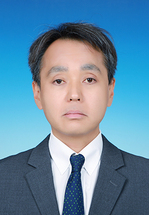
姓名:Sei Yoshida
职称:教授
邮箱:seiyoshi@nankai.edu.cn
办公地址:南开大学生命科学学院A402
研究方向:
1.细胞膜运输及信号转导的作用和机制;
2.肿瘤细胞中巨胞饮和mTORC1通路的相互作用;
3.肾脏足细胞和上皮细胞中的巨胞饮功能与疾病的关系。
教育背景与工作经历:
2002年,于日本东京大学获得博士学位;
2006年起,先后在美国密歇根大学任博士后、研究员、研究调查员,伊利诺伊大学任助理研究教授。
2020年至今,于南开大学任教授。
研究成果:
主要从事巨胞饮与PI3K-mTORC1通路间相互关系以及内质网相关降解功能等方面研究。以第一作者/通讯作者在Science、JCI、JCB、EMBOJ.等多个著名学术期刊共发表文章12篇。
代表性论文:
1. Swanson JA* and Yoshida S*. (2018).Macropinosomes as units of signal transduction.Philosophical Transactions of the Royal Society B. 374: 20180157 (review)
2. Yoshida S*, Pacitto R, Sesi C, Kotula L, and Swanson J*. (2018).Dorsal Ruffles Enhance Activation of Akt by Growth Factors.Journal of Cell Science. 131: jcs220517 doi: 10.1242/jcs.220517
3. Rosselli-Murai LK, Yates JA, Yoshida S, Bourg J, HoKKY, White M, Prisby J, Tan X, Altemuc M, Bao L, Wu ZF, Veatch SL, Swanson JA, Merajver SD, and Liu AP. (2018).Loss of PTEN promotes formation of signaling-capable clathrin-caoted pits.Journal of Cell Science.131: jcs208926 doi: 10.1242/jcs.208926
4. Yoshida S, Pacitto R, Inoki K and Swanson J. (2018).Macropinocytosis, mTORC1 and Cellular Growth Control.Cellular and Molecular Life Sciences. 75: 1227-1239 doi: 10.1007/s00018-017-2710-7 (review)
5. Pacitto R, Gaeta I, Swanson JA and Yoshida S*. (2017).CXCL12-induced macropinocytosis modulates two distinct pathways to activate mTORC1 in macrophages.Journal of Leukocyte Biology. 101: 683-692 doi: 10.1189/jlb.2A0316-141RR
6. Yao Y, Wang J, Yoshida S, Nada S, Okada M and Inoki K. (2016).Role of Ragulator in the Regulation of Mechanistic Target of Rapamycin Signaling in Podocytes and Glomerular Function.Journal of American Society of Nephrology. 27: 3653-3665 doi: 10.1681/ASN2015010032
7. Swanson JA and Yoshida S. (2016).Macropinocytosis.Encyclopedia of Cell Biology. (R.A. Bradshaw and P. Stahl, Eds.). 2: 758-765. (Book chapter)
8. Yoshida S, Pacitto R, Yao Y, Inoki K and Swanson JA. (2015).Growth Factor Signaling to mTORC1 by Amino Acid-laden Macropinosomes.Journal of Cell Biology. 211: 159-172. doi: 10.1083/jcb.201504097
9. Yoshida S, Gaeta I, Pacitto R, Krienke L, Alge O, Gregorka B and Swanson JA. (2015).Differential signaling During Macropinocytosis in Response to M-CAF and PMA in Macrophages. Frontiers in Physiology. 6:8. doi: 10.3389/fphys.2015.00008.
10. Huber TB, Edelstein CL, Hartleben B, Inoki K, Jiang M, Koya D, Kume S, Lieberthal W, Pallet N, Quiroga A, Ravichandran K, Susztak K, Yoshida S and Dong Z. (2012).Emerging role of autophagy in kidney function, diseases and aging.Autophagy. 8: 1009-1031. (Review)
11. Feliciano WD, Yoshida S, Straight SW, and Swanson JA. (2011).Coordination of the Rab5 cycle on macropinosomes.Traffic. 12:1911-1922. doi: 10.1111/j.1600-0854.2011.01280.x.
12. Yoshida S, Hong S, Suzuki T, Nada S, Mannan AM, Wang J, Okada M, Guan KL, and Inoki K. (2011).Redox regulates mTORC1 activity by modulating the TSC1/TSC2-Rheb pathway.Journal of Biological Chemistry. 286:32651-32660.
13. Inoki K, Mori H, Wang J, Suzuki T, Hong S, Yoshida S, Blattner SM, Ikenoue T, Ruegg MA, Hall MN, Kwiatkowski DJ, Rastaldi MP, Huber TB, Kretzler M, Holzman LB, Wiggins RC, Guan KL. (2011).mTORC1 activation in podocytes is a critical step in the development of diabetic nephropathy in mice.Journal of Clinical Investigation.121:2181-2196.
14. Narita M, Young AR, Arakawa S, Samarajiwa SA, Nakashima T, Yoshida S, Hong S, Berry LS, Reichelt S, Ferreira M, Tavare S, Inoki K, Shimizu S, Narita M. (2011).Spatial coupling of mTOR and autophagy augments secretory phenotypes.Science. 332: 966-970.
15. Nagamatsu K, Kuwae A, Konaka T, Negal S, Yoshida S, Eguichi M, Watanabe M, Mimuro H, Koyasu S, Abe A. (2009).Bordetella evades the host immune system by inducing IL-10 through a type III effector, BopN.Journal of Experimental Medicine. 206:3073-3088.
16. Yoshida S, Hoppe AD, Araki N, and Swanson JA. (2009).Sequential signaling in plasma-membrane domains during macropinosome formation in macrophages.Journal of Cell Science. 122:3250-3261. doi: 10.1242/jcs.053207.
17. Yoshida S, Handa Y, Suzuki T, Ogawa M, Suzuki M, Tamai A, Abe A, Katayama E, and Sasakawa C. (2006).Microtubule-severing activity of Shigella is pivotal for intercellular spreading.Science. 314:985-989.
18. Matsuzawa T, Kuwae A, Yoshida S, Sasakawa C and Abe A. (2004).Enteropathogenic Escherichia coli activates the RhoA signaling pathway via the stimulation of GEF-H1.EMBO Joural. 23:3570-3582.
19. Yoshida S and Sasakawa C. (2003).Exploiting host microtubule dynamics: A new aspect of bacterial invasion.Trends in Microbiology. 11:139-143. (Review)
20. Yoshida S, Katayama E, Kuwae A, Mimuro H, Suzuki T, and Sasakawa C. (2002).Shigella delivers an effector protein to trigger host microtubule dynamic-instability, which promotes Rac1 activity and efficient bacterial internalization.EMBO Journal. 21:2923-2935.
21. Kuwae A, Yoshida S, Tamano K, Mimuro H, Suzuki T, and Sasakawa C. (2001).Shigella invasion of macrophage requires the insertion of IpaC into the host plasma membrane.Journal of Biological Chemistry. 276:32230-32239.